

Third-Party Risk Management
When your supply chain becomes your risk
You are responsible for suppliers you do not control.
TPRM makes these dependencies visible, measured, and manageable — before an incident occurs.
Book a call

Your business depends on suppliers.
According to McKinsey up to 80% of a company's cost base comes from external procurement.
This means 80% of your business relies on your suppliers.
Every vendor with access to your systems is an unmonitored entry point
Risk originates from three main areas:
-
1.Operational
a failure at a critical supplier halts multiple business functions simultaneously
-
2.Security Incident
a breach via a compromised vendor leads to data loss and public reputational damage
-
3.Market
lost contracts, restricted entry to the EU market, and reduced valuation during M&A
Does this sound familiar?
-
"We aren't sure how many suppliers actually have access to our data."
-
"A client is demanding a third-party risk assessment, but we don't have a formal evaluation process."
-
"We manage dozens of vendors without clear categorization by criticality."
-
"We are expanding into the EU market and cannot verify supply chain maturity."
Identify threats in your supply chain right now
Quick AssessmentWe turn your supply chain into a fully managed system
converting assumptions about contractors into structured control.We build a comprehensive Third-Party Risk
Management (TPRM) framework — from initial vendor inventory to a complete governance package.
- 01 Identify who your suppliers are, which ones are critical, and who holds access to your data and systems.
- 02 Create a categorized inventory based on risk level,
- 03 Evaluate the actual security posture of key vendors,
- 04 Review contracts for required security clauses,
- 05 Pinpoint vulnerabilities,
- 06 Deliver a step-by-step remediation plan.
Tailored to your needs — ranging from a one-time critical vendor assessment to building an in-house, ongoing TPRM program.
You receive a functional,
transparent vendor control framework rather than a static report, delivering these key advantages:
-
1
Clear risk visibility
based on verified technical data rather than self-reported vendor questionnaires
-
2
Proactive decision-making
critical findings reach executive management before incidents occur
-
3
Regulatory and client compliance
complete audit-ready documentation for partners and regulators
Efficient budget allocation
vendors are prioritized by risk level, eliminating unnecessary across-the-board monitoring costs
TPRM Methodology
Our methodology is built on transparency, control, and dependency tracking.
Each evaluation follows a single chain:
- Vendor
- Dependency
- Criticality
- Risk
- Action
Every recommended action traces directly back to the underlying risk and the business dependency that makes the vendor critical. All decisions are backed by evidence.
Structured across 3 key phases:
-
1
Discovery & Mapping
build the vendor inventory, categorize third parties by access type, and assign a Supplier Criticality Score.
-
2
Assessment & Risk Evaluation
conduct security due diligence, review contracts for essential clauses, and score risks using tailored Impact / Likelihood indices.
-
3
Planning & Governance
identify gaps, create a remediation roadmap with assigned owners and deadlines, set up continuous monitoring, and establish governance documentation.

Deliverables
What
you see:
- Vendor inventory categorized by criticality and risk profile
- Complete mapping of access rights to systems, data, and core business processes
What
you control:
- Assessment of your current security controls
- Contracts updated with security clauses + standardized templates for new vendors
Next steps:
- Identified risks paired with an actionable remediation roadmap
- Audit-ready TPRM framework tailored to your organization

Engagement Options
Core
-
Supplier Criticality Assessment
one-time criticality evaluation.
Verified vendor inventory categorized by criticality and access levels.
-
TPRM Assessment
one-time risk evaluation of key vendors.
Security assessment report, risk register, and remediation roadmap.
-
TPRM Program
Developmentfull TPRM program implementation.
Integrated methodology deployed within your GRC platform.
Ongoing
(Available following the initial project)
-
Periodic Supplier
Reviewrecurring evaluations.
Updated assessment reports and refreshed risk profiles.
-

Managed TPRM
Supportfully outsourced vendor risk management.
Continuous inventory updates and ongoing assessments handled by our team.
Cases
-
TPRM
Trusted Software Update —
18,000
organizations breached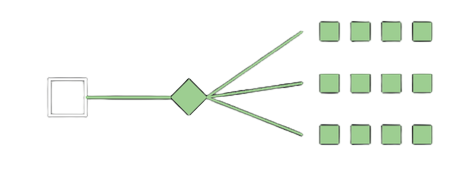
Attackers planted malicious code in a routine update from a trusted software provider. Every customer who installed it — including government agencies — was compromised through a channel they were told to trust.
- 18,000 organizations infiltrated
- Attack hidden for months
-
TPRM
Over-Privileged Contractor —
40M cards
stolen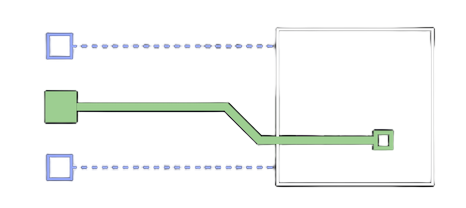
Attackers entered through an HVAC contractor whose credentials held excessive access to internal systems. The supplier wasn't business-critical — its level of access made it security-critical.
- $200M+ in losses
- CEO and CIO dismissed
-
TPRM
Your Supplier's Supplier —
366 clients
exposed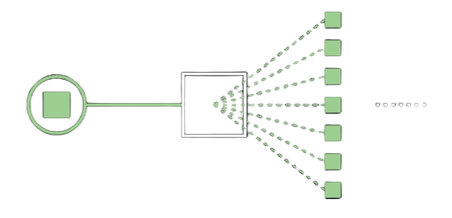
A breach at a support provider used by a major identity vendor exposed access to 366 downstream clients — who never worked with that provider directly.
- Disclosed 2 months late
- $6B market value lost in a single day
Key
differentiators
Advantages of partnering with us:
Embedded regulatory compliance:
automatically generated audit trails covering NIS2 ISO 27001/27005 and NIST SP 800-53/800-161 requirements.
We also establish core operational compliance for DORA
MiCA and CSDDD frameworks.
01 Business-Centric Language
we translate technical threats into clear, actionable steps to safeguard operations
02 Full-Cycle Approach
every identified issue is tied directly to its operational impact and a concrete mitigation plan
03 Engineering Depth, Not Box-Checking
we establish a functional risk management process rather than relying on generic survey forms
04 Proprietary Risk Model
precise Impact / Likelihood metrics instead of subjective scoring
05 OSINT Engine
external threat intelligence to detect credential leaks, unpatched vulnerabilities, and undisclosed vendor incidents
06 Adaptability
custom implementation within your existing GRC platform or tailored governance framework
FAQ
- How many suppliers can you assess?
-

From a small group of critical third parties to your entire vendor base. Our BASIC tier covers key suppliers, while Program Development establishes a scalable process for any volume.
- How is OSINT utilized?
-
For critical vendors, we conduct independent external intelligence assessments to identify credential breaches, exposed assets, and unreported security incidents regardless of self-reported survey answers.
- Do you require access to our systems?
-
No. Our assessment relies on documentation reviews, contract analysis, structured interviews, and external threat intelligence. Direct infrastructure access is not required.
- Do you deliver via GRC platforms or static documents?
-
Both. Organizations managing large supplier bases benefit from GRC platform integration, while teams requiring an internal process without external tools receive a tailored governance document package.
You cannot protect what you cannot see or control.
Schedule a scoping call — we will review your supply chain setup and highlight your key risk areas.